Brand & Identity
A brand is the reason a stranger believes you before you have said anything.
A system, not a logo
A logo on its own is a file. What makes a business look like one business is everything around it: two or three colours used the same way every time, a typeface that suits the trade, and a way of writing that sounds like the person who answers the phone.
So that is what gets delivered. The mark in every format you will be asked for, the palette, the type, and a short guide written to be used rather than admired.
It then turns up on the things customers actually touch. The Google review stand we make for shop counters is set in the shop's own colours, type and logo, not ours.
Where it starts
With who you are selling to and who you are up against, not with a mood board. A boutique estate agent in a town of franchises needs to look established. A soft-furnishings label built on vintage fabric needs to look like it has taste. Those are different briefs before anyone opens a design tool.
And how it sounds
Tone of voice is the part most small brands skip, and it is the part customers actually meet: the homepage, the quote, the reply to an enquiry. We set it down in plain terms so whoever writes for the business next writes in the same voice.
SEE IT WORKING

Finch & Hatton
An unfinished store inherited mid-build, trading in a fortnight, then rebuilt from an empty folder.
Read the case study →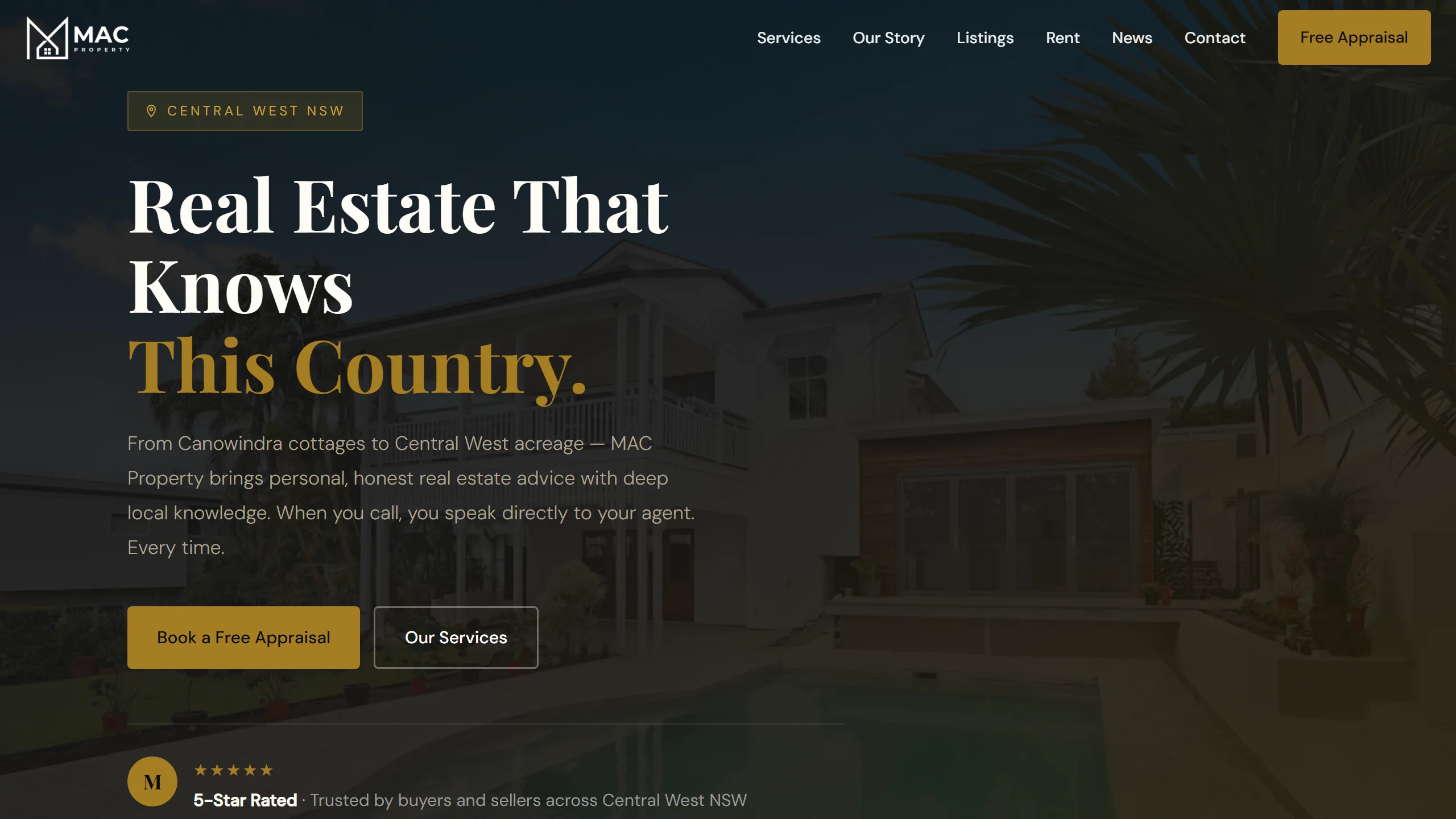
MAC Property
A boutique agency site its owner runs herself: listings, photos and sold stickers without a phone call.
Read the case study →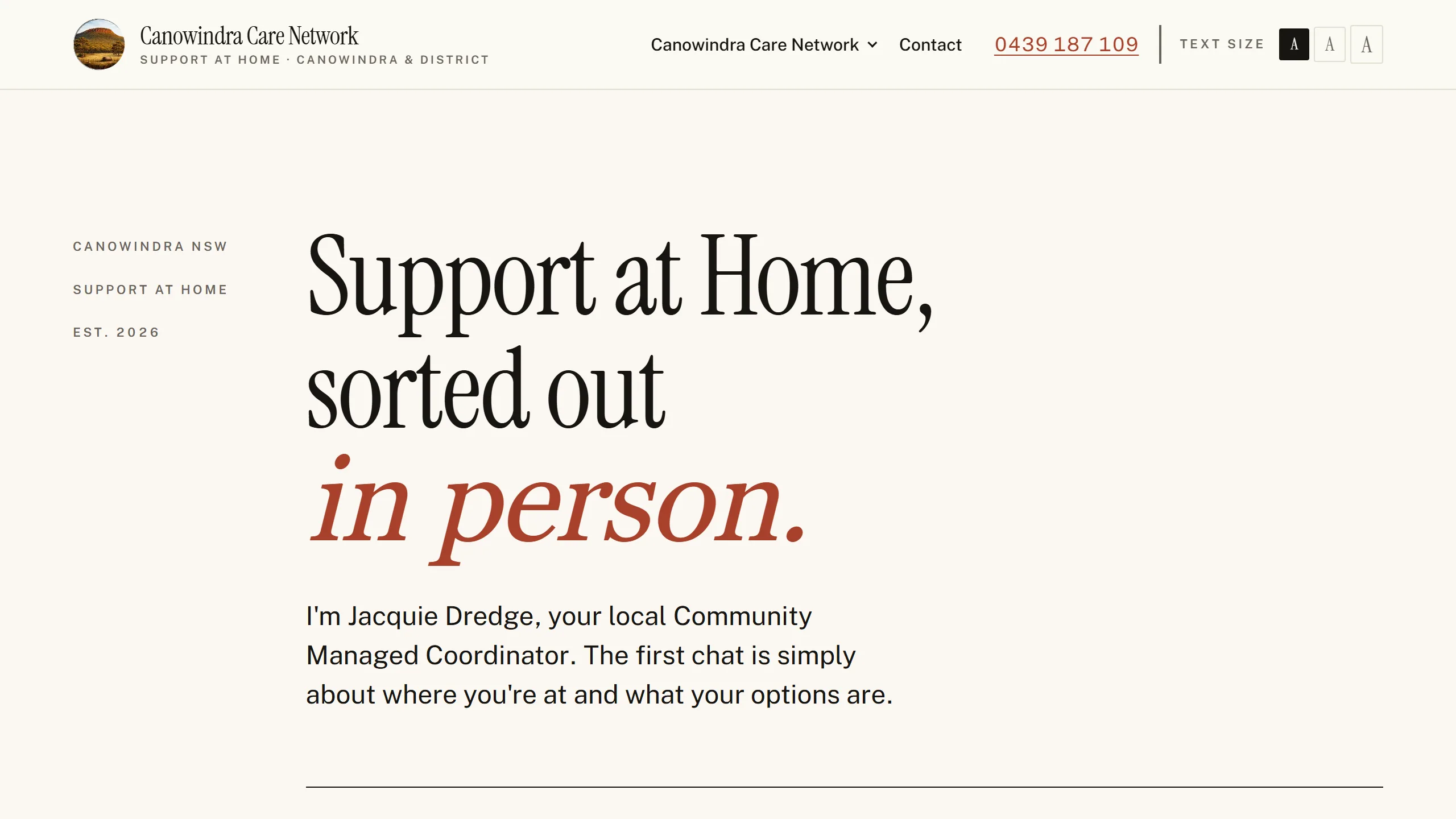
Canowindra Care Network
Aged care built for the people who actually used it: bigger text, plain words, one clear way to get help.
Read the case study →COMMON QUESTIONS
Can I have a brand without a new website?
Yes. It is most often done as part of a build because the site is where the brand gets used first, but the identity stands on its own.
What files do I end up with?
The logo as SVG and in the raster formats printers and social platforms ask for, the colour values, the typefaces, a favicon, social assets, and the guidelines document.
I already have a logo I like. Is that a problem?
No. Often the right job is to keep the mark and build the system around it.